East Africa: Services and Supply
Increasing Access to Family Planning through In-Reaches
 In-reaches utilize a trained team of service providers from the facility to provide family planning services to clients with a focus on long-acting and permanent methods (LAPMs). In Tanzania, in-reach teams also visit facilities that lack capacity to support service delivery. In addition, the team provides mentorship to the facility-based providers, building their capacity to provide long-acting permanent methods routinely.
Why In-Reaches Are Important in Provision of Family Planning Services
Benefits for family planning clients:
- Enables clients to access LAPMs in a primary facility that routinely does not provide this service, removing the need for referral on the same
- Convenient access for working women as in-reaches can be conducted at facility-based work sites as well
- Increase competency to counsel and provide LAPMs among facility-based service providers
Benefits for family planning service provision:
- Opportunity for staff with the clinical skills but without the practical experience to be mentored on-the-job on LAPM
- Providing these services at the primary facility ensures that the underserved have access to quality and affordable family planning services
- Clients receive some family planning in-reach services for free
- In-reaches integrate other reproductive health services such as cervical cancer screening with family planning and serve as an opportunity for consultation on multiple health concerns in one visit
Evidence
- Some Tupange Pamoja-supported health facilities in Tanzania who conduct in-reaches saw a 36% increase in family planning uptake during the implementation period. (source: HMIS, February-April 2019).
- Over 300 health providers have been mentored at Tupange Pamoja implementing sites through in-reaches.
- Over 120 in-reaches have been conducted reaching about 7,640 new FP clients with contraception services, of which 4,403 (57%) were new LAPM clients (source: HMIS, July 2018-June 2019).
Guidance on Organizing In-Reaches
At Facility Level
- Select health facilities where the in-reaches will be conducted based on demand for LAPM, skill gap amongst service providers and adequate space with audio and visual privacy. Sites within a certain geographical area are mapped and linked to an appropriate referral center (usually a higher-level health facility) where major and minor complications can be handled on an as needed basis.
- Select the team(s), ideally comprised of four persons with at least two competent service providers who have been trained on provision of permanent family planning methods (in most cases a doctor and a nurse or two nurses).
At Community Level
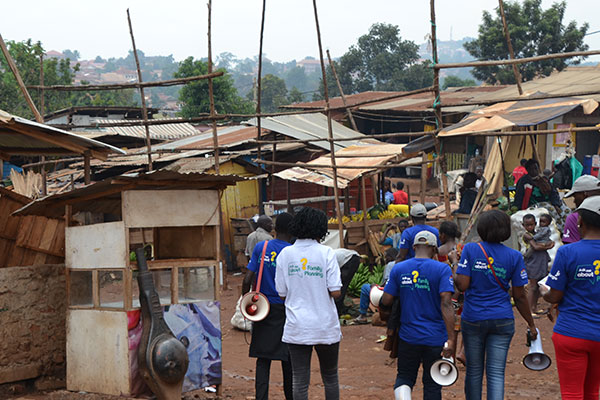
- Use CHWs/VHTs to mobilize clients at least 3-5 days before and on the day of the in-reach
- Publicize the events through use of posters at community and facility level, word of mouth, radio shows, community drives and gatherings and use of drama groups
During the In-Reach
- The facility team sets up and offers services according to the agreed time schedule
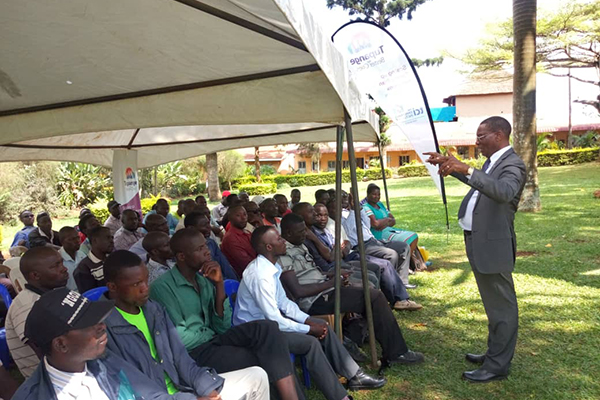
- Conduct group counseling which is followed by individual counseling before a client chooses a method
- Register clients and get informed consent from clients who select permanent methods
- Subsequently offer various LAPMs to increase method mix
- Monitor the client post procedure and provide appropriate referral
- After each procedure, fill in the relevant MoH daily activity summary forms to capture services offered each day
Mentorship
- During the in reach, the team mentors service providers at the facility who first observe, then perform the services under supervision
- Each service provider being mentored has a Mentee Log Book where the mentee records when and the content of each mentorship session
- The facility team keeps a log of each mentee’s progress and quarterly gives the MOH a list of mentees ready for assessment and certification
- Supportive supervision is provided to the mentees on ongoing basis
Tips
- During in-reaches, provide information addressing myths and misconceptions and benefits of FP
- Provide follow up cards to clients with clear instructions on what to do in case of complications. Ideally, a dedicated phone line should be provided
- It is essential to provide for removals as well as uptake of implants and IUCDs.
- There should be a routine review of the selected sites (every six months recommended) to add new sites to replace those weaned off because they now have staff competent to provide all methods)
Key Outcomes for In-Reaches
- Increased uptake of family planning services or contraception
- Increased number of family planning health providers with the capacity to offer long-acting permanent methods at facilities
Monitoring Processes
- Program monitoring of number of family planning acceptors served at in-reaches
- Number of acceptors served at the in-reach for each method
- Number of mentees completing mentorship
- Client feedback and satisfaction through client exit interviews.
Success Indicators
- Number of new FP acceptors by method
- Number of health facility staff mentored during in-reaches
TCI APP USERS PLEASE NOTE
You will only receive CERTIFICATES by email – when earning a score above 80% – and will not be able to view or print a certificate PDF from the TCI app.
Test Your Knowledge
Earn a Certificate