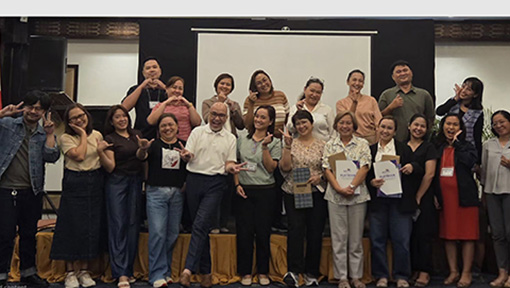
City teams gather with TCI at a Learning Circle held in Davao City in April.
In April, representatives from eight cities across Luzon, Visayas, and Mindanao in the Philippines sat down together for a workshop unlike the ones they were used to. There was no lecture, no fixed curriculum, no outside expert telling them what to do. Instead, they talked to each other – comparing notes, swapping frustrations, and piecing together what was actually working in their own communities.
That workshop was the launch of Learning Circles, a new approach from TCI’s Philippines hub for supporting the cities it works with on family planning. Instead of running traditional trainings, TCI built a space where cities could learn directly from one another’s experience: reflecting on what implementation actually looks like on the ground, exchanging solutions that had already been tested in the field, and walking away with practical next steps for strengthening their family planning services.
The results surprised even the people running it. Despite coming from very different contexts, the eight cities kept landing on the same challenges – and the same kinds of fixes, adapted to fit each location. It became clear that many of the most workable solutions weren’t waiting to be imported from outside. They already existed, scattered across these cities’ own experience. What had been missing was simply a place to share them.
Learning Circles gave participants two things at once: a mirror and a window. Cities looked inward at their own practices, then looked sideways at what their peers were doing – and turned both into concrete commitments they could act on.
The timing mattered, too. Tighter budgets had forced TCI to rethink how it supports these cities, and the answer turned out to be more creative than simply doing less. Learning Circles showed that meaningful support doesn’t have to mean expensive, resource-heavy interventions. By putting cities’ own knowledge to work for each other, TCI can keep offering real value – while putting more ownership in local hands, not less.
The first Learning Circle also surfaced where cities most want to focus next: governance, data systems, service delivery, financing, supply chain, and partnerships. Those priorities will shape the sessions to come, keeping the model responsive to what cities actually need rather than what a curriculum assumes they need.
If there’s one idea at the heart of Learning Circles, it’s this: sustaining a family planning program isn’t only about keeping support flowing. It’s about building each city’s ability to learn, adapt, and help the next one along. Eight cities in Luzon, Visayas, and Mindanao are already proving that when people compare notes honestly, collaboration can turn a shared challenge into shared progress.