Pakistan: Demand Generation
Mass Media
What Is It?
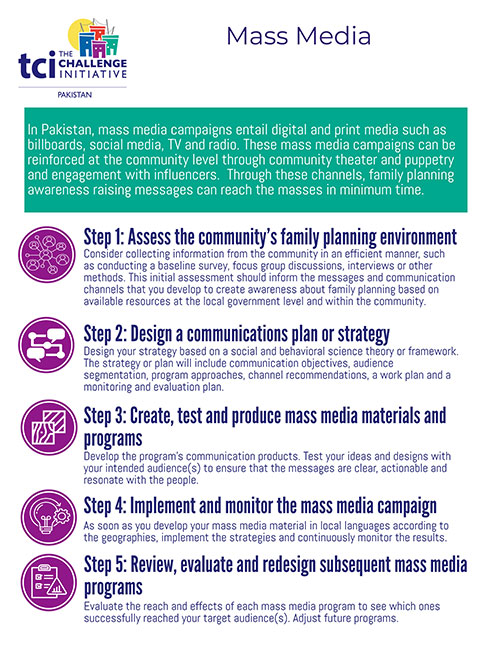
 There are various ways of generating demand for family planning and adolescent and youth sexual and reproductive health (AYSRH). One of the most efficient ways is through mass media campaigns. These campaigns entail digital and print media such as billboards, social media, TV and radio. In addition, these mass media campaigns can be reinforced at the community level through community theater and puppetry and engagement with influencers. Through these various channels, family planning awareness raising messages can reach the masses in minimum time.
Multiple mass media platforms can be used depending on local knowledge, attitudes, and practices, and evidence shows that using a mix of channels works best. Before developing a mass media campaign, it is essential to understand the local family planning environment so messages can be tailored to address specific issues of your intended audience.
What are the benefits?
- Engages the audience through multiple media channels
- Significantly increases exposure to family planning messages
- Has the potential to reach large audiences in minimum time
- Can help address myths and misconceptions about family planning by providing factual information
- Can be highly creative
- Starts a conversation about family planning at the household and community levels
- Can be instrumental in generating demand for family planning service
How to implement
Step 1: Assess the community’s family planning environment
To assess the current family planning knowledge and behavior in the community, you should consider collecting information from the community in an efficient manner, such as conducting a baseline survey, focus group discussions, interviews or other methods. This initial assessment should inform the messages that you develop for your information, education and communication (IEC) materials and strategy to create awareness about family planning based on available resources at the local government level and within the community.
Step 2: Design a communication plan or strategy
Design your strategy based on a social and behavioral science theory or framework. The strategy or plan will include communication objectives, audience segmentation, program approaches, channel recommendations, a work plan, and a monitoring and evaluation plan. The strategy must also cover religious elements and be endorsed by influential community leaders to earn people’s trust and buy-in.
Step 3: Create, test and produce mass media materials and programs
Develop the program’s communication products, including mass media and print materials, IEC material, and other creative scripts. In this step, you should combine art and science–the creative and artistic vision needed to move audiences and inspire them to change will meet the analysis, theory, and strategic decisions of the strategy/plan. You will also test your ideas and designs with your intended audience(s) to ensure that the messages are clear, actionable and resonate with the people.
Step 4: Implement and monitor the mass media campaign
As soon as you develop your mass media material in local languages according to the geographies, implement the strategies and continuously monitor the results. You can execute the mass media campaigns via TV, radio, electronic and print media, influencers, podcasts, webcasts, web series, local theatres, advertisements and social media.
TCI has had much success in leveraging social media as well as community radio, talk shows and community theater because of the expense and national regulations related to traditional mass media, such as TV, in Pakistan.
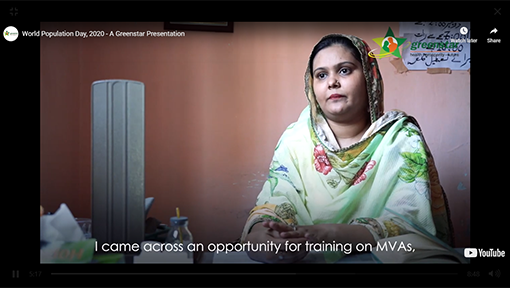
Below are some short video clips that the Population Welfare Department (PWD) and Greenstar have developed and tested that can be used during trainings, advocacy meetings and generally to raise awareness and demand for family planning.
Official Population Welfare Department Punjab Campaign
Population Welfare Department, KPK
Greenstar video campaigns
Step 5: Review, evaluate and redesign subsequent mass media programs
Evaluate the reach and effects of each mass media program to see which ones successfully reached your target audience(s). Adjust future programs based on the evidence of impact evaluation for specific media forms and messaging.
TCI APP USERS PLEASE NOTE
You will only receive CERTIFICATES by email – when earning a score above 80% – and will not be able to view or print a certifcate PDF from the TCI app.
Test Your Knowledge
Earn a Certificate

Tips
- Different media platforms work in different contexts, so it is essential to conduct an analysis in your community to ensure you reach your intended audiences with the right channel(s).
- Messaging should be tailored to each audience type.
- You should brand any materials and programs you produce to track service delivery results.
- Involving religious and community leaders in family planning discussions and campaigns can help communities accept family planning and change social norms.
Challenges
- Requires both technical and creative skills
- Can be costly
- Possible resistance from community to the messages
- Behavior change is challenging to monitor and evaluate after mass media campaigns, while it is easier to measure reach of messages from the campaign